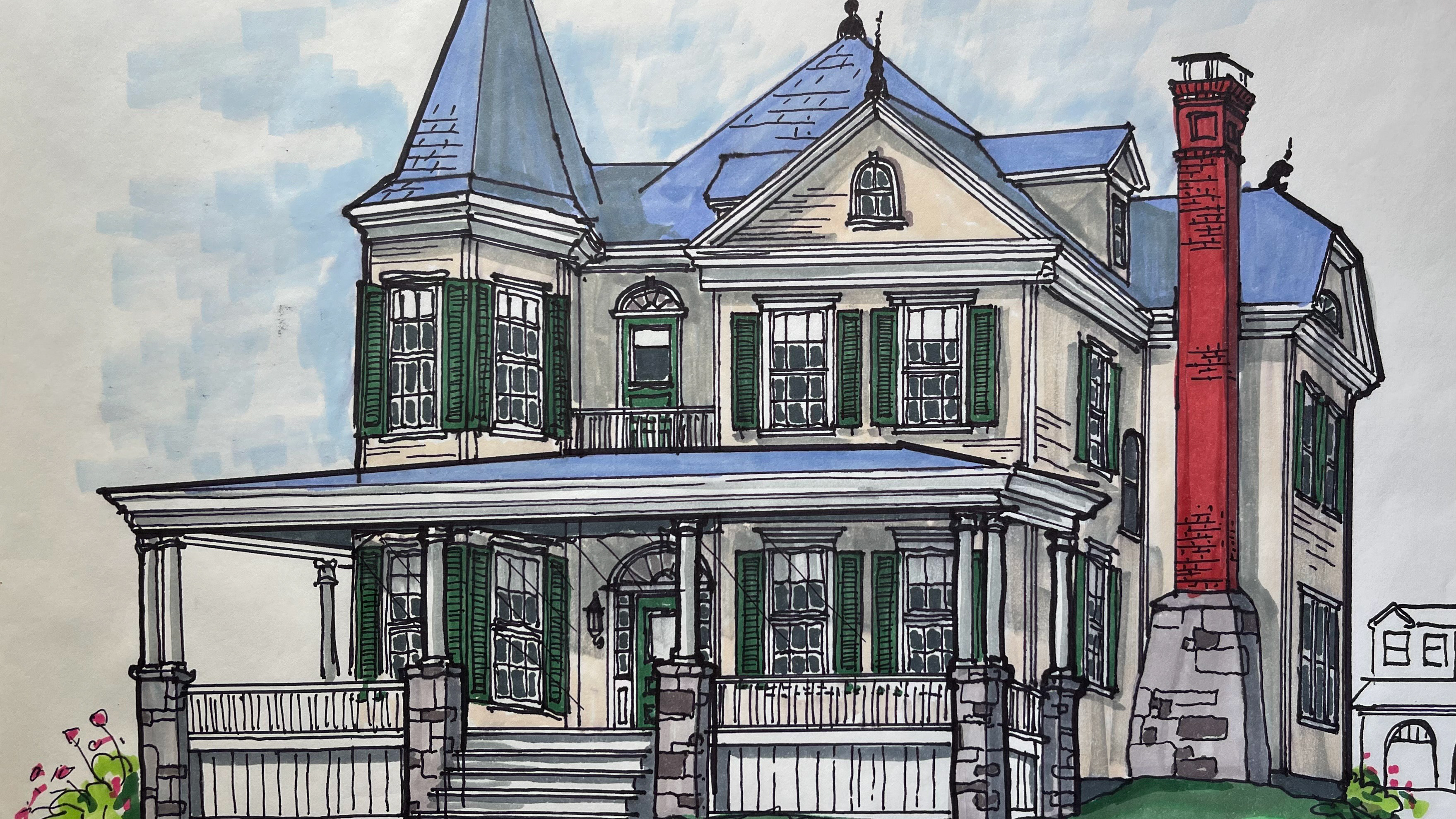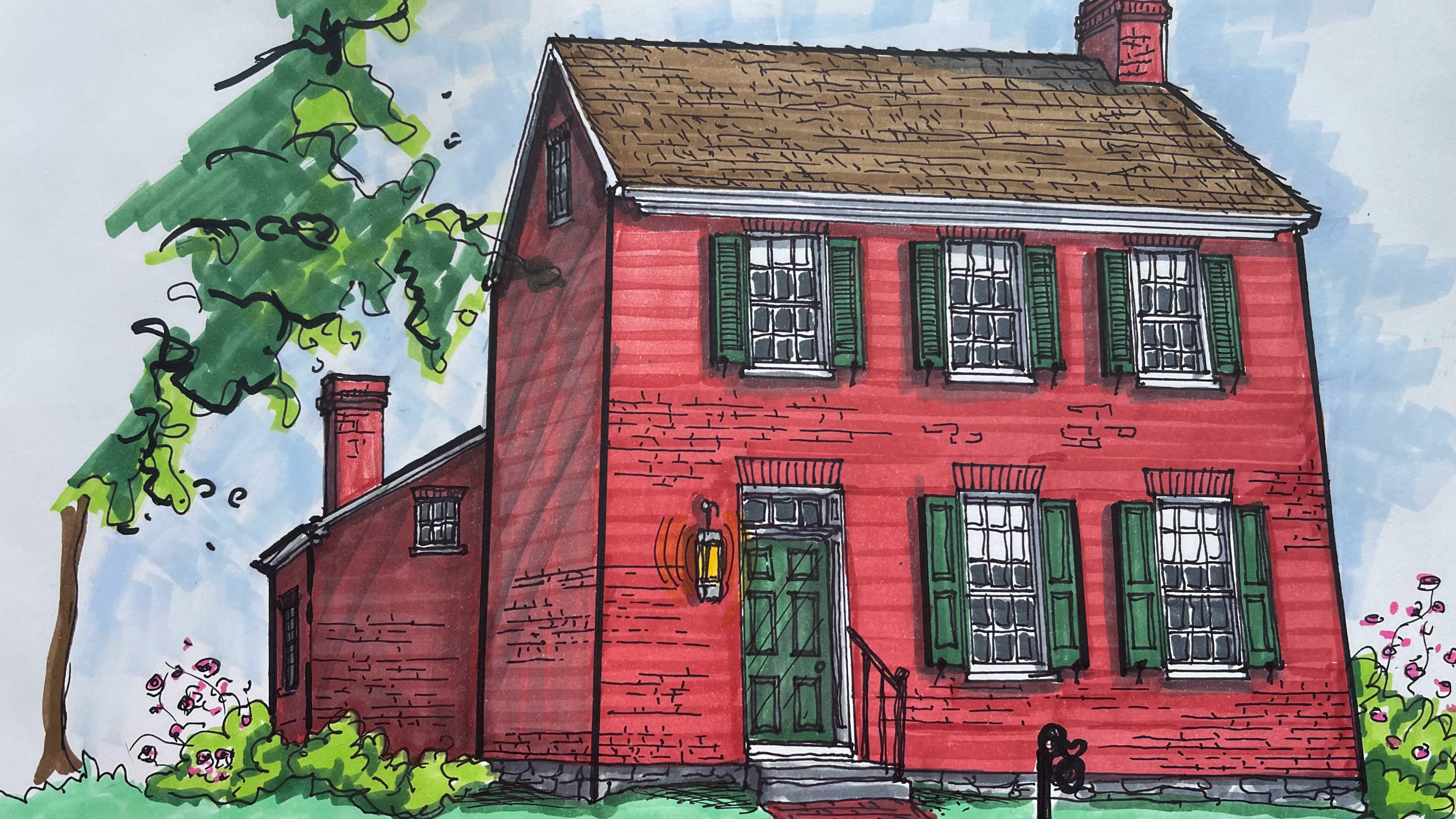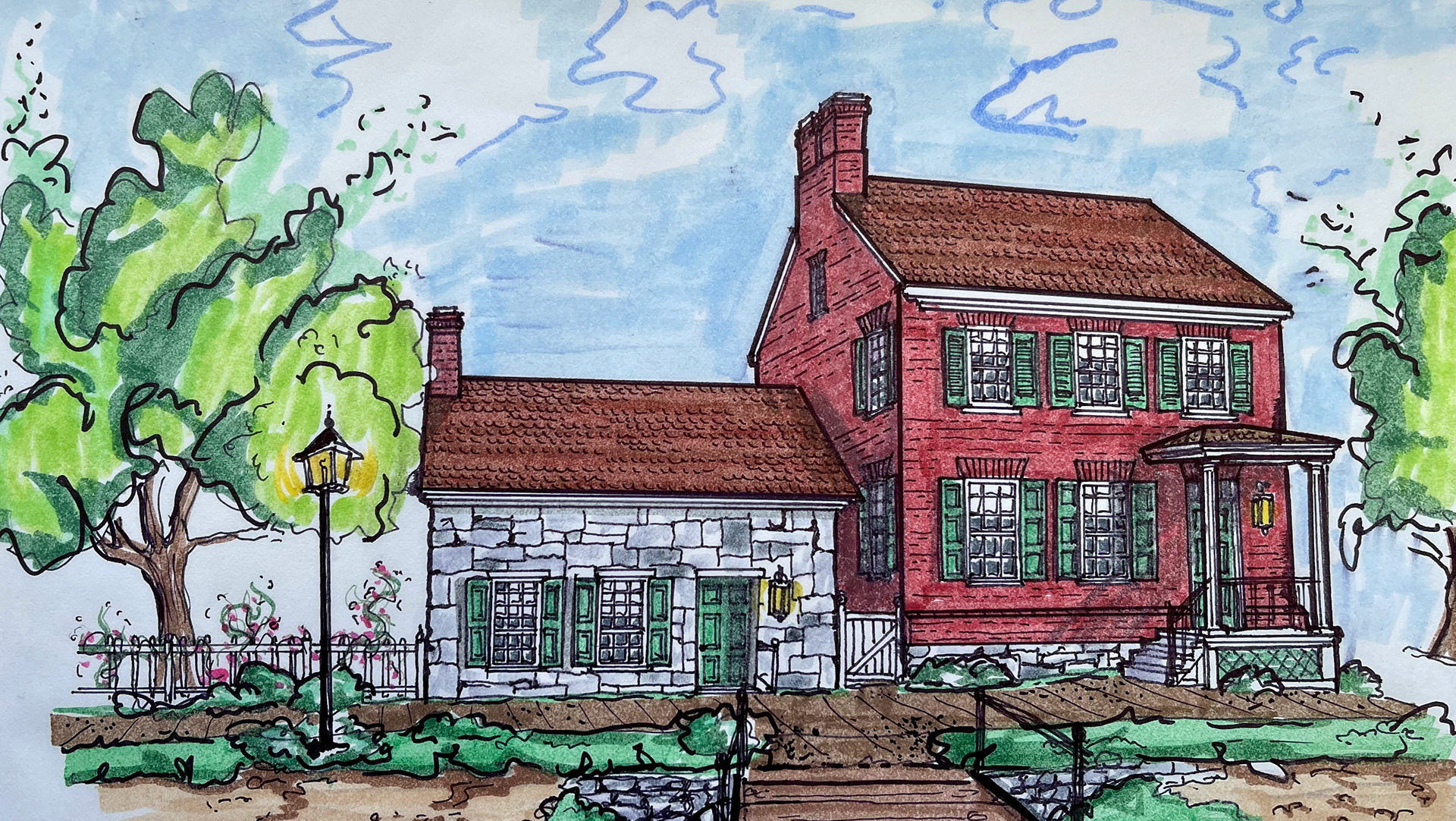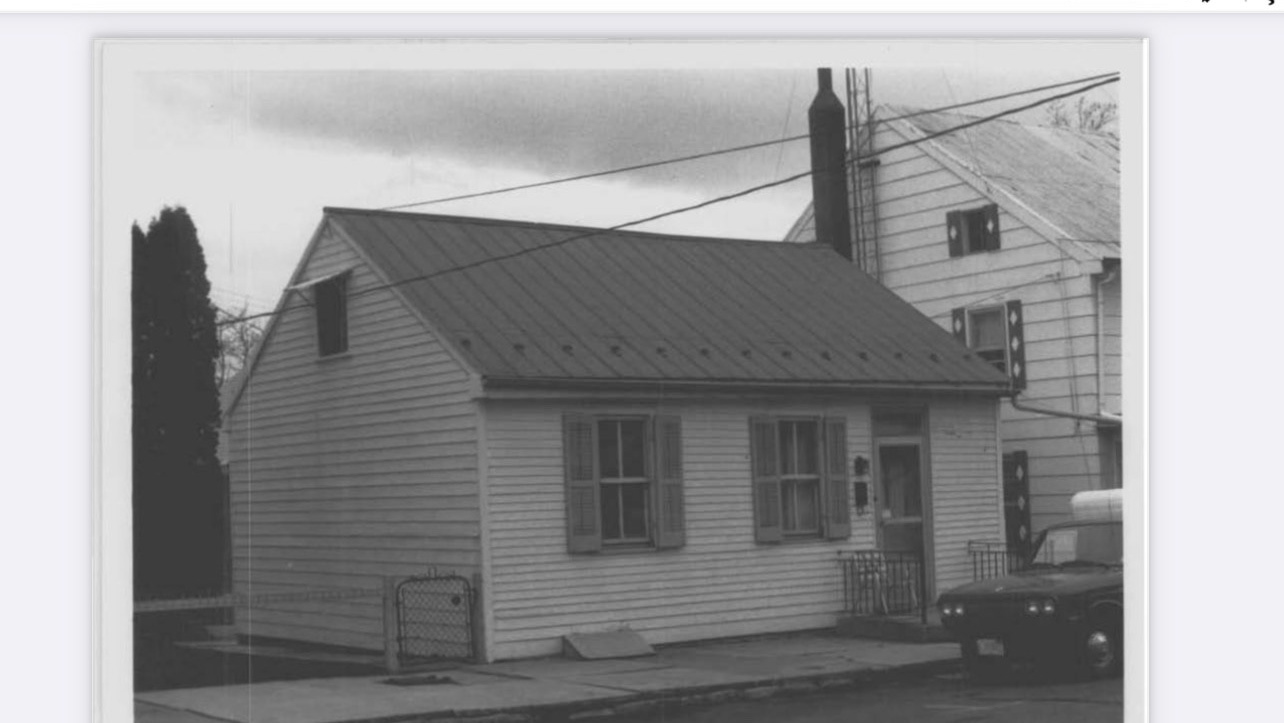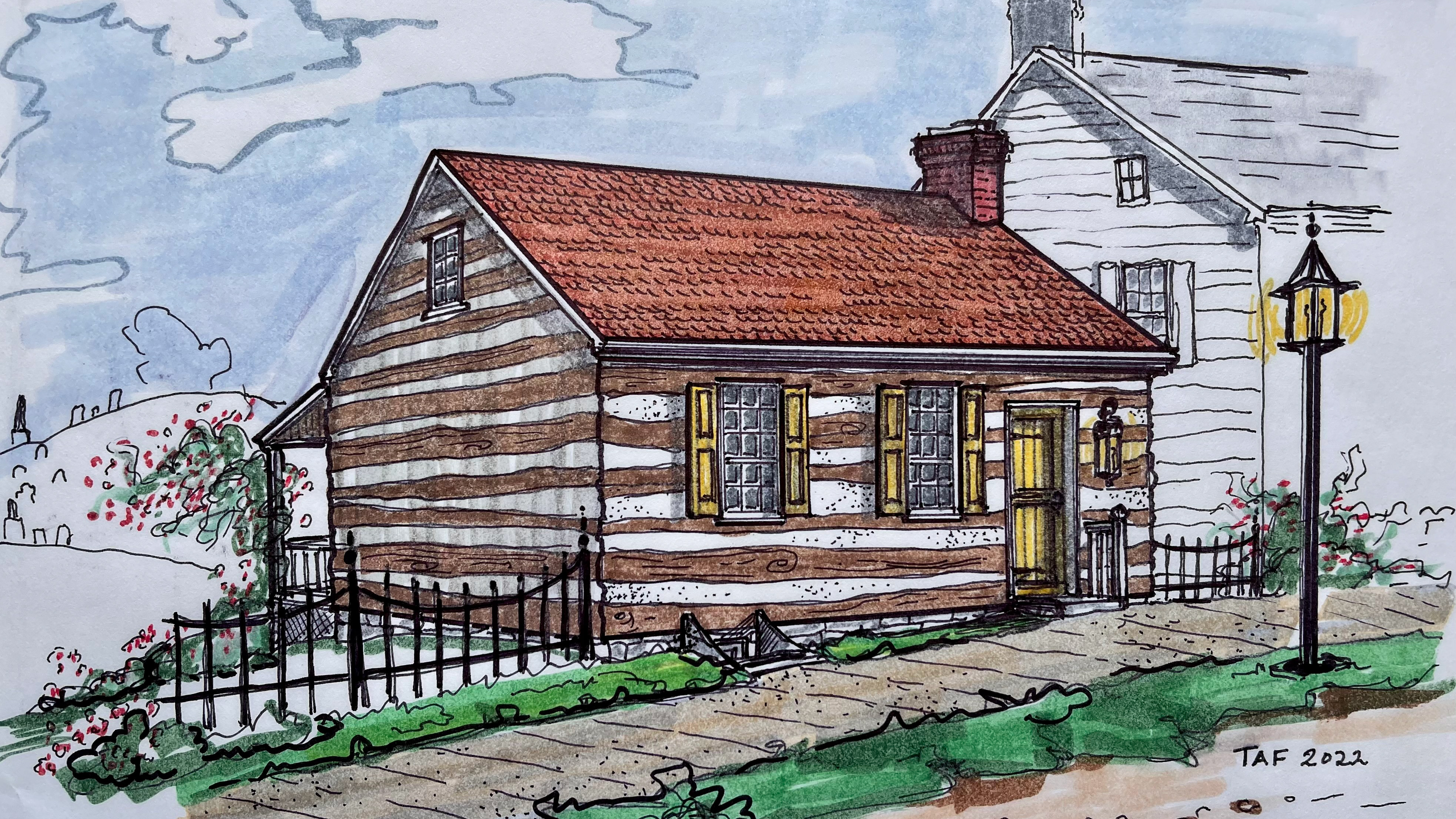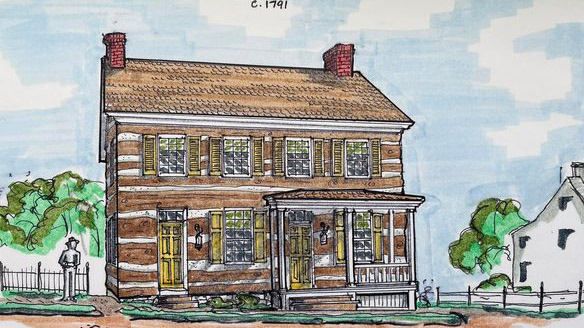
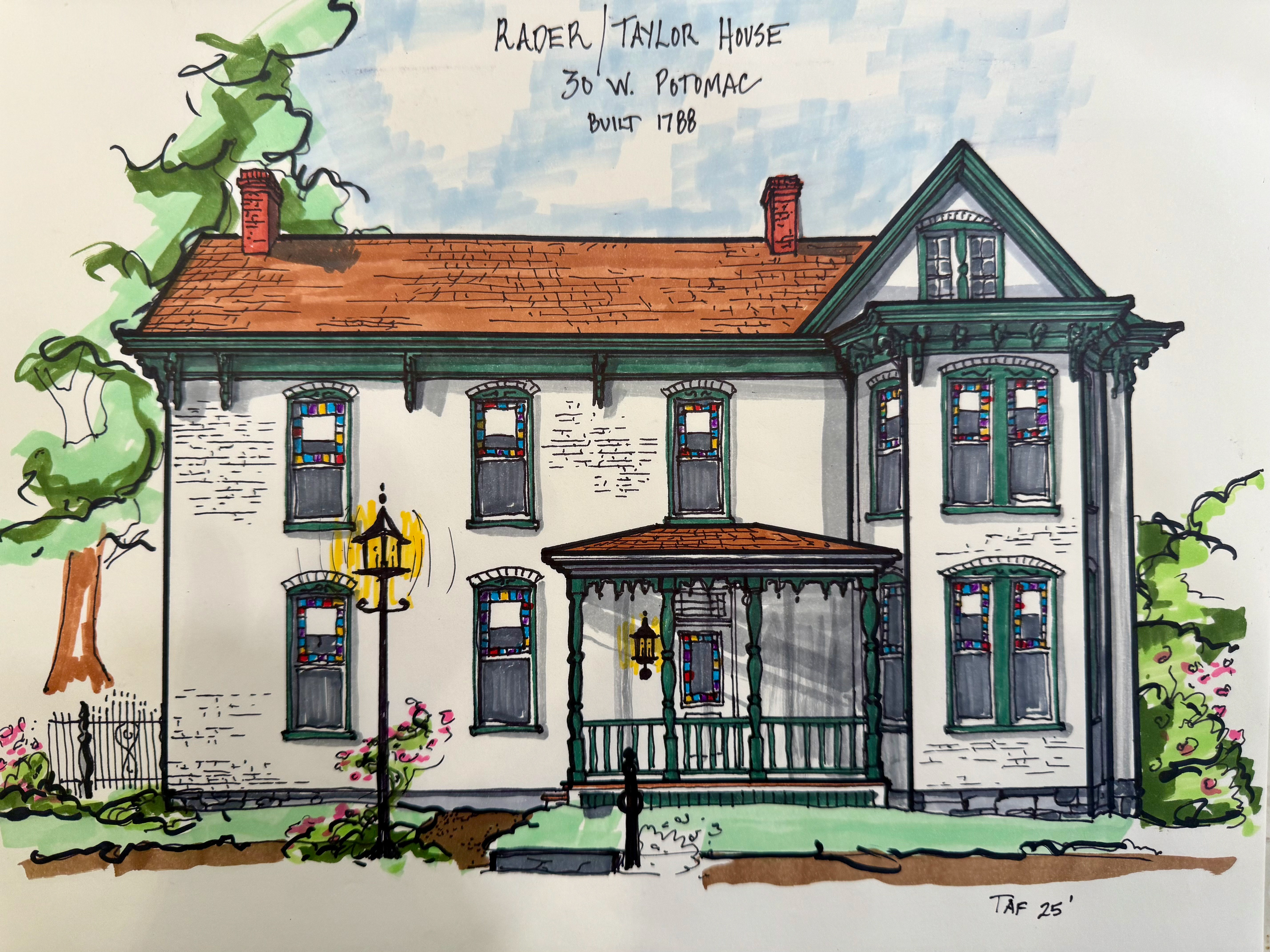
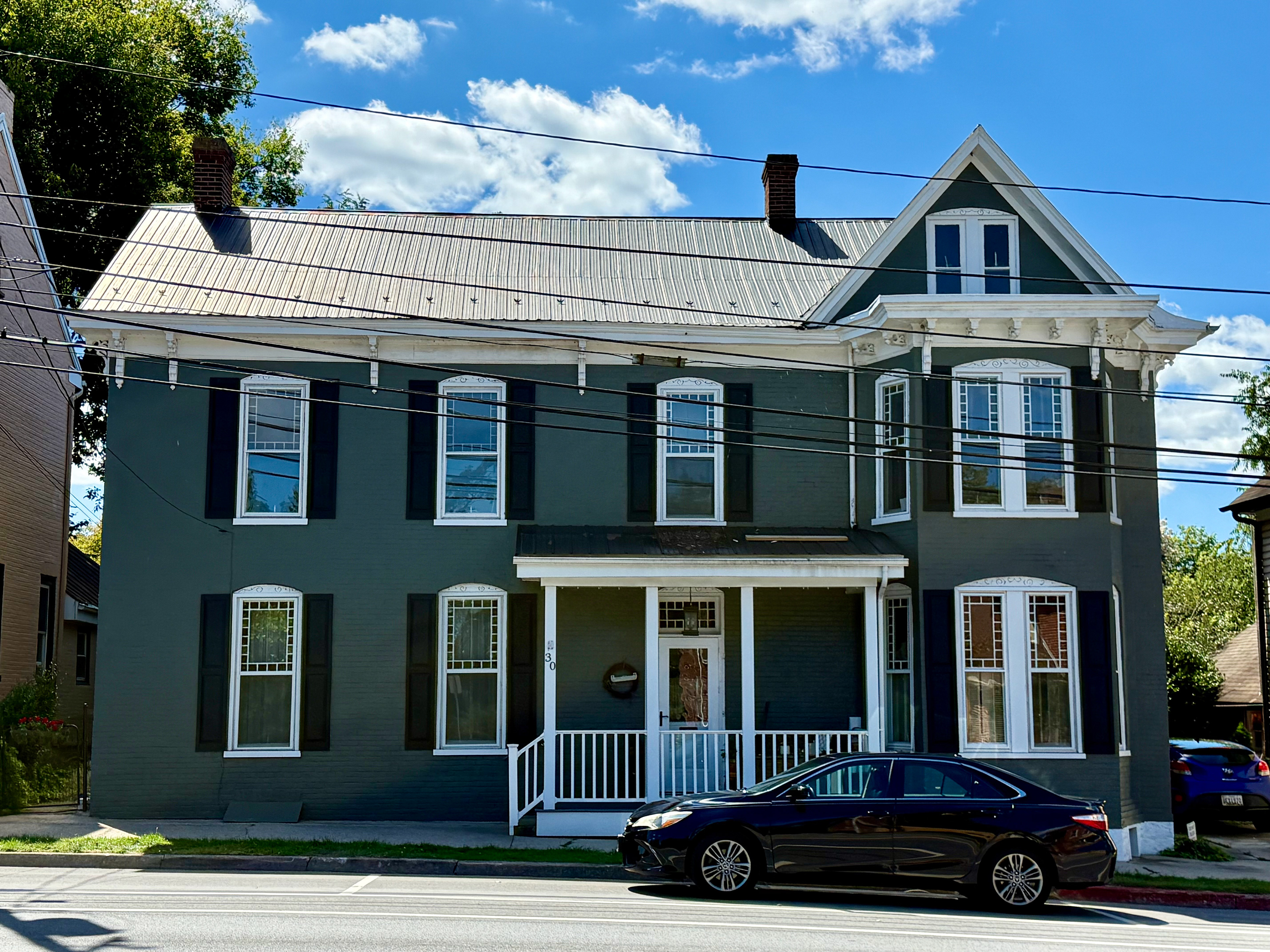
On Lot 16, one of the last full-size lots on the south side of West Potomac Street, stands one of Williamsport’s most notable residences. Today, the house appears as a large Victorian brick home, its façade decorated by arched stained-glass windows, deep cornices with scrolled brackets, and a striking two-story bay window crowned by a pedimented gable. Yet behind this 19th-century exterior lies one of the town’s earliest surviving dwellings. The eastern section of the house is, in fact, an original 18th-century log structure—still visible where the current owner, Kristie Baker, thoughtfully exposed the logs in the upper hall.
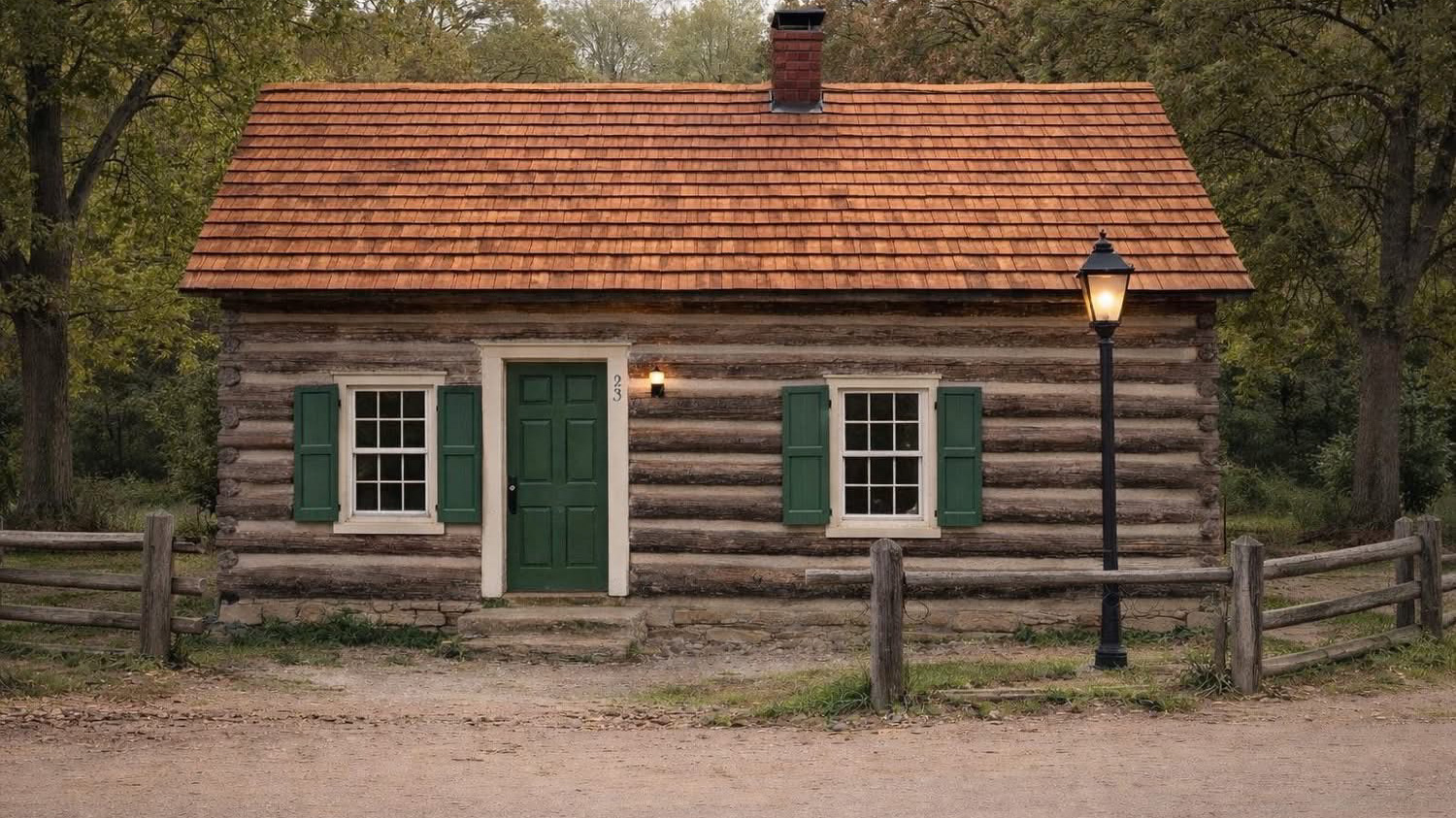
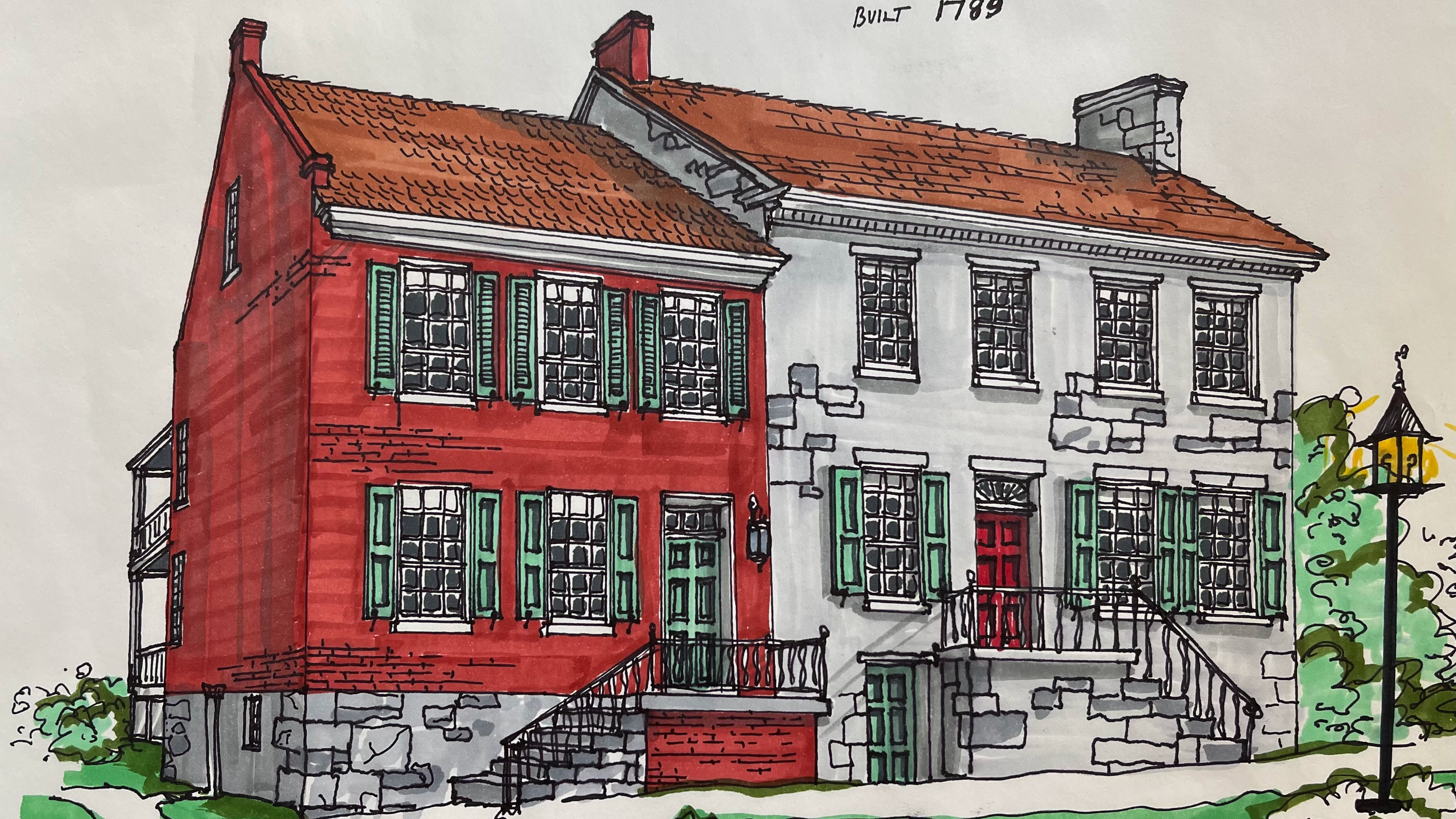
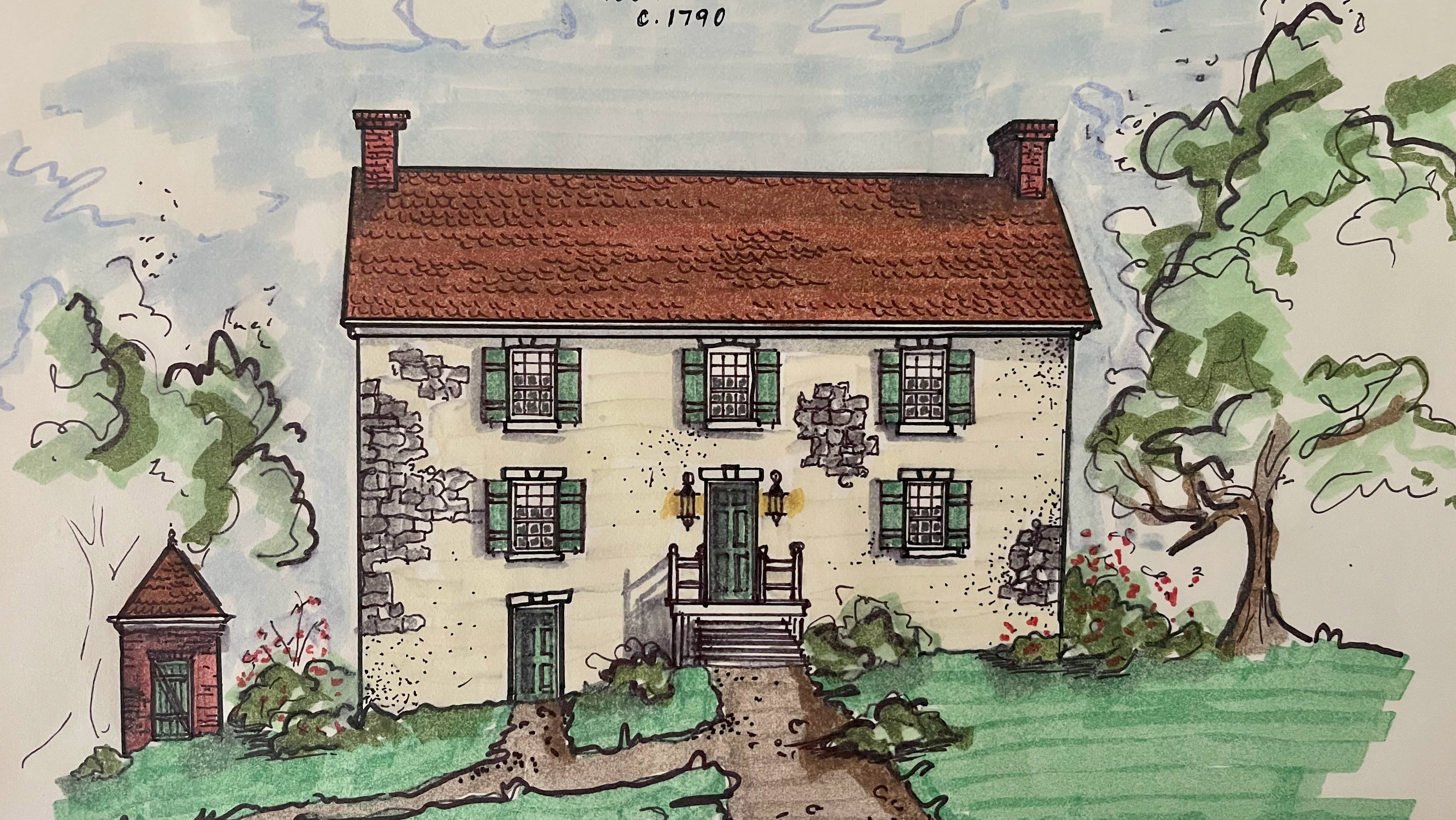
The story begins with Martin Rader (also spelled Roder), born in Bethlehem, Pennsylvania in 1753. His family migrated south to Virginia’s Shenandoah Valley in the late 1700s, passing through Williamsport on the wagon road. A carpenter and joiner, Rader leased Lot 16 from General Otho Holland Williams in 1788 for just over seven pounds. Martin must have recognized his skills could be useful in the newly settled town. He built a two-story log house—the earliest part of the current home—and lived there for four years. Rader likely helped construct other early Williamsport houses, including the now-demolished John Hogg house. A fragment of his incredible craftsmanship remains in the attic: part of the original Georgian staircase, still showing its faux-painted finish and finely turned balustrade. In 1792, Rader sold the house to John Kugle for fifty pounds, a significant sum for the period.
Later, in 1824, the house passed to John Peter Herr Jr. and his wife Sarah Boroff Herr. Herr, born in 1787, was the son of a Revolutionary War veteran. After his first wife, Catherine Boroff, died in 1821 leaving six children, Herr married her sister Sarah. He prospered as a real estate investor, eventually owning more than 50 lots in Williamsport. By 1850, census records list no occupation for him—evidence of his independent wealth. At his death in 1855, Herr left substantial property holdings to his wife and children. Sarah lived until 1870, leaving the log house to her daughters Isabella and Elizabeth.
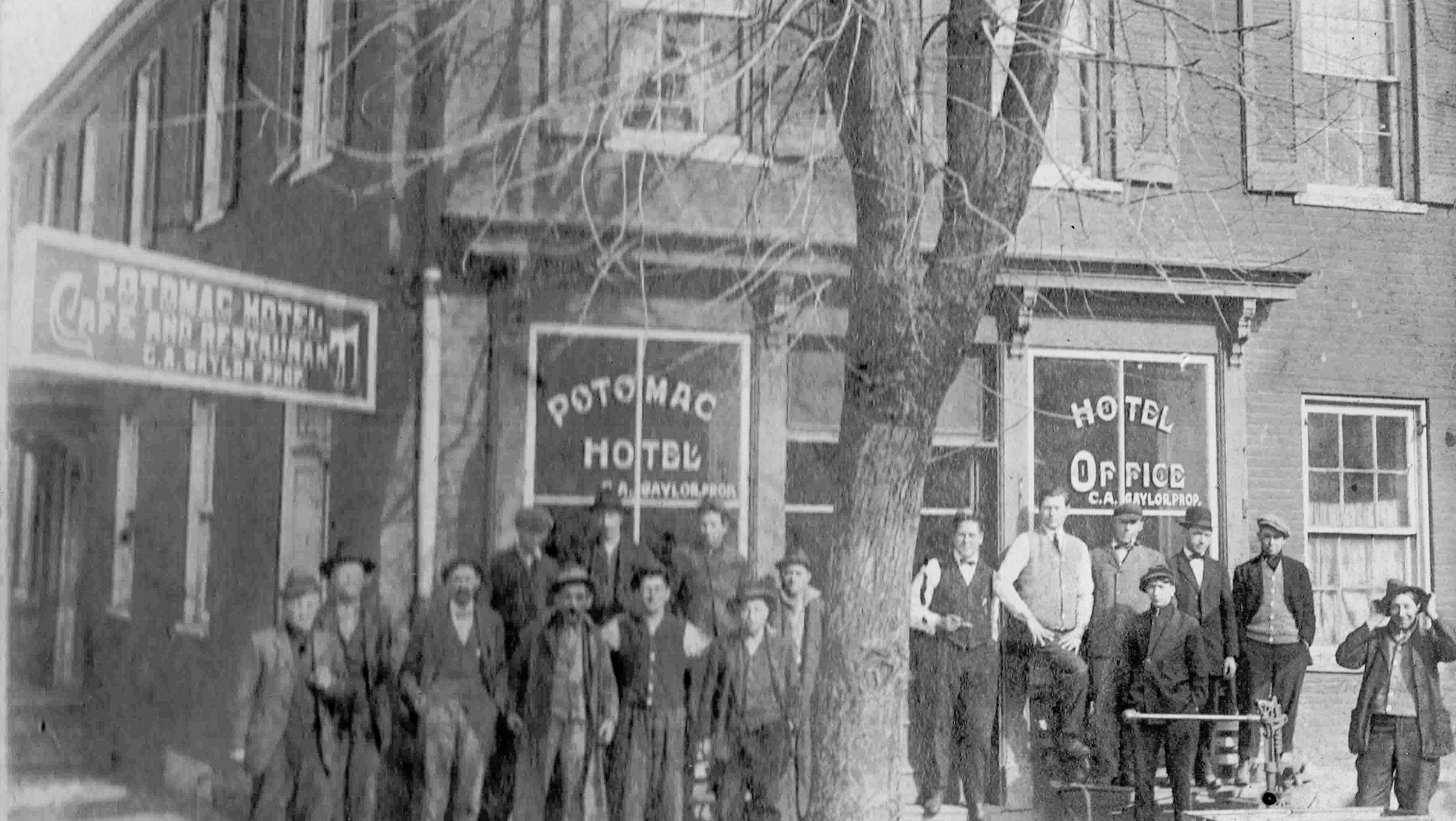
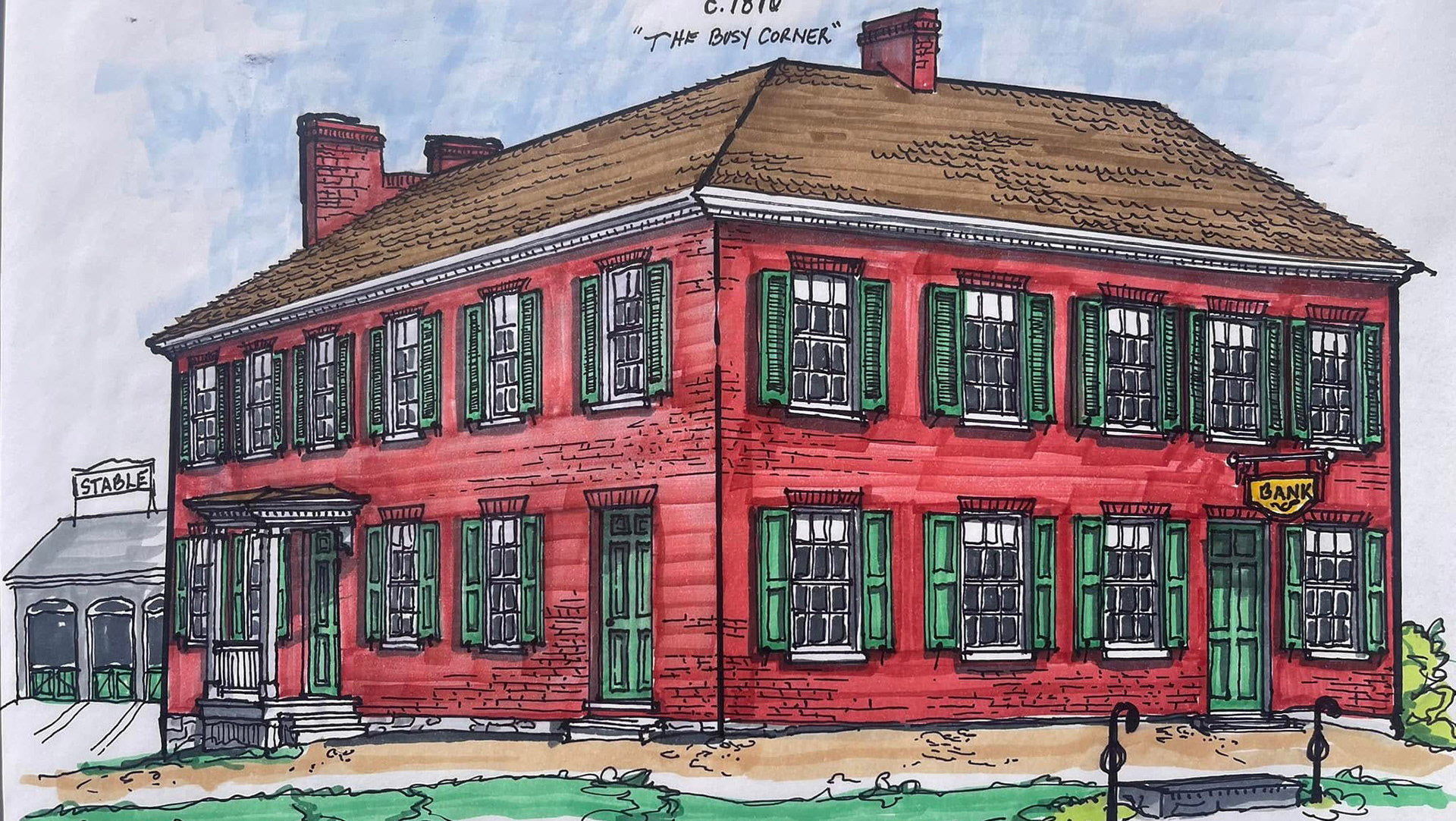
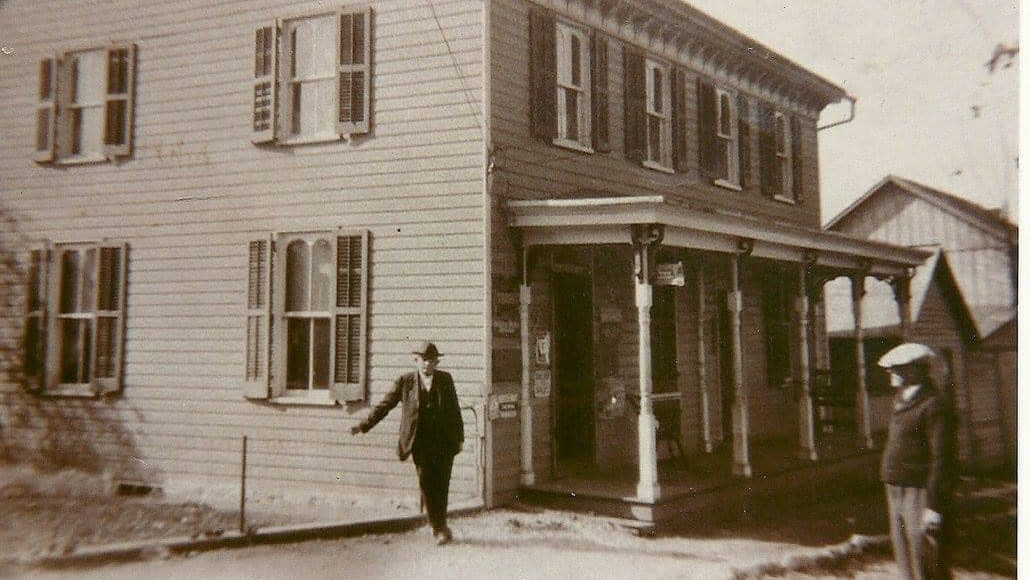
In 1892, Isabella and Elizabeth Herr sold the “weatherboarded wooden house” to William E. Taylor for $750. Born in Fairfax Courthouse, Virginia in 1826, Taylor moved as a child with his family to Maryland in the 1830s, working at Ferry Hill Plantation in Sharpsburg before settling in Williamsport in 1847. William’s father ran the ferry between Shepherdstown and Sharpsburg. Mr. Taylor became a C&O Canal boatman as a young man, a trade he likely learned at Ferry Hill. Family lore recalls that on the eve of the Civil War, Taylor won ownership of the Taylor Hotel in a card game for $1,000 from a Mr. Ensminger. Ensminger was afraid that the town would be destroyed in the up coming war and was eager to let the hotel go. During the Confederate occupation of Williamsport after Gettysburg in 1863, General Robert E. Lee is said to have stayed at the Taylor Hotel and even requested quiet when Taylor’s beautiful wife, Christianne Newcomer, went into labor with their daughter Rosa. Lee also made an impression on the town by often sitting on the limestone carriage step in front of the building and visiting with the townsfolk. Christianne died in 1878, but William continued to run the hotel until 1895. It is William who enlarged and modernized the house on Lot 16 creating the building we see today. When he sold it to Captain Joseph Byron in 1902 for $3,200 (more than four times what he paid just ten years earlier), the improvements were evident.
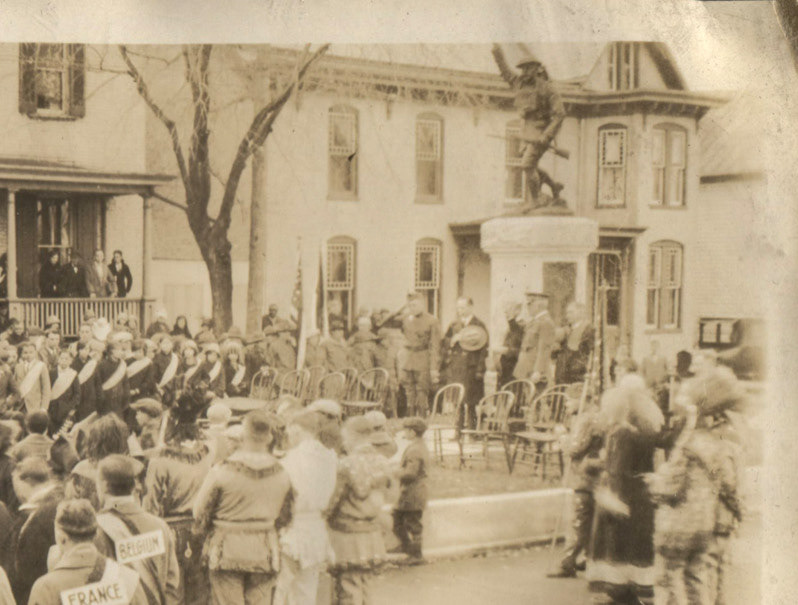
Byron owned the property only briefly before selling to the Lemen family. The John and Elissa Slayman Family later purchased the house, restoring it and transforming the backyard into a landscaped oasis. Mr. Slayman was the former mayor of Williamsport from 1985-2005, and Mrs. Slayman, active in the garden club, left a lasting imprint on the property. Their children grew up in the house.
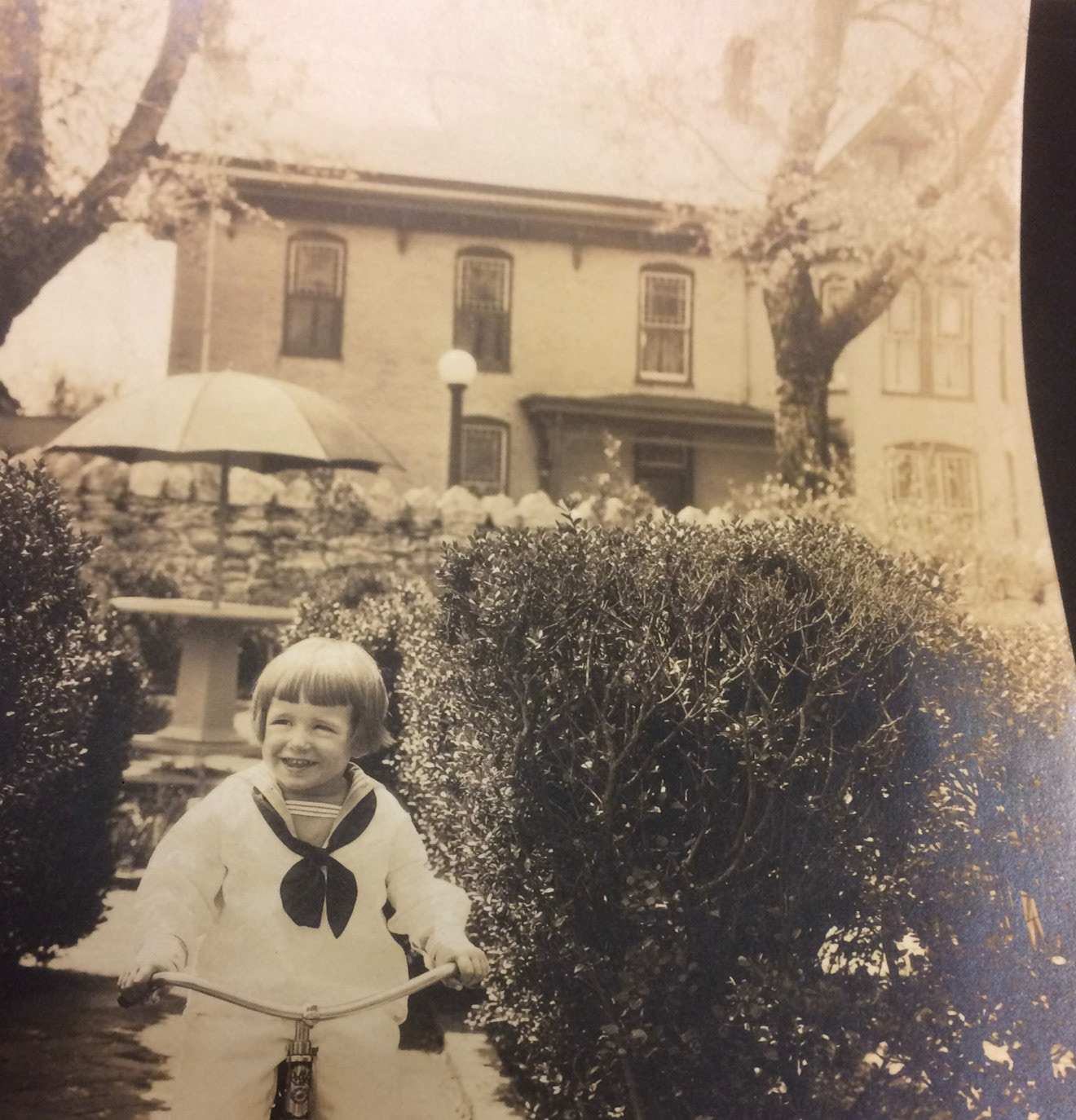
In 2017, Kristie Baker, a Williamsport native, purchased the house. Despite its need for repair, due to neglect, she recognized its historic significance. Over the next decade, she and her family restored the roof, painted rooms and refinished floors, and even rebuilt the badly deteriorated original 1788 brick smokehouse. Mrs. Slayman’s old gardens were reimagined into a peaceful sanctuary, complete with the creation of a reading nook by the old pool. Kristie’s careful stewardship ensured that the home’s character was preserved while making it livable for a new generation.
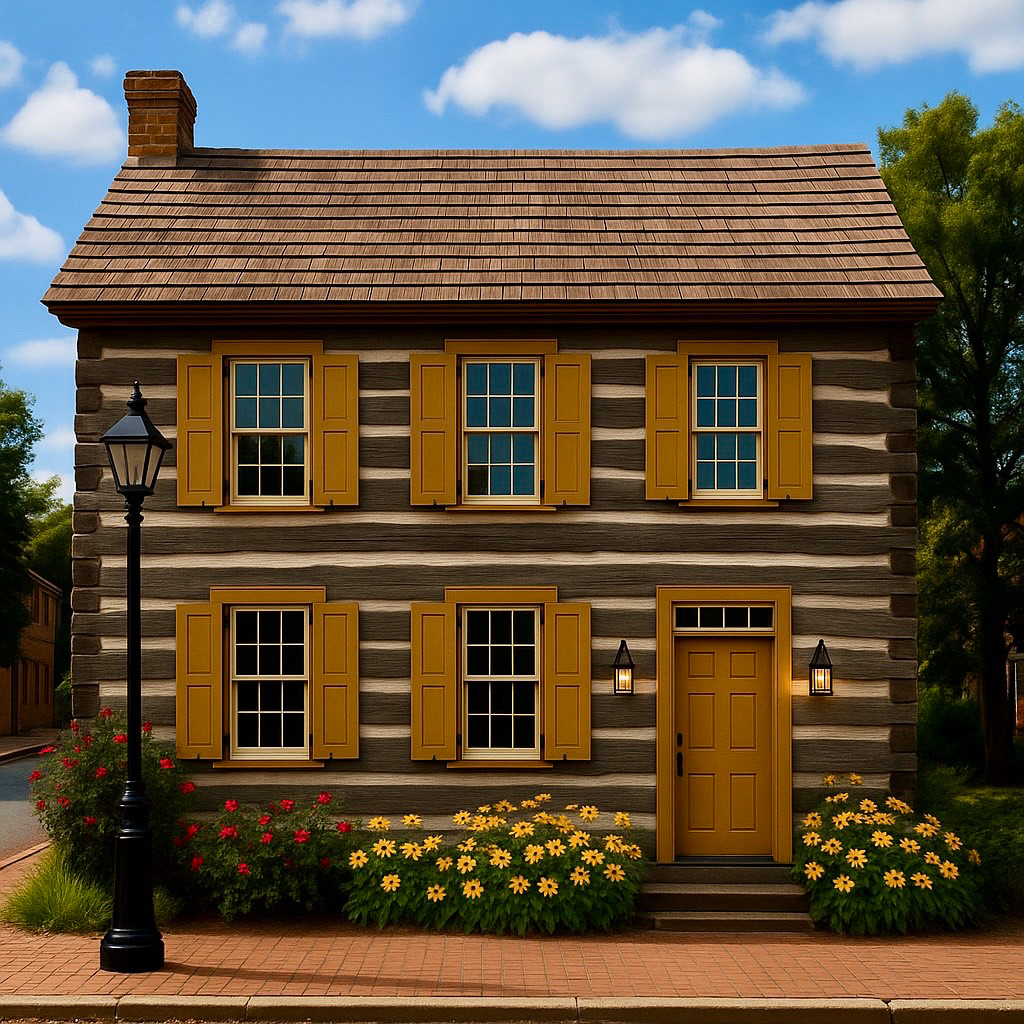
Now, nearly 240 years after Martin Rader first raised its log walls, the house is ready for a new steward as the house will go up for sale this month. Its story reflects the layered history of Williamsport itself—its early settlement, prosperity, wartime trials, and enduring resilience. One hopes its next owner will value that history and continue the legacy of preservation, for Williamsport’s historic buildings are treasures not to be lost.
Special thanks to: Kristie Baker, Ann Wisner, Debi Robinson