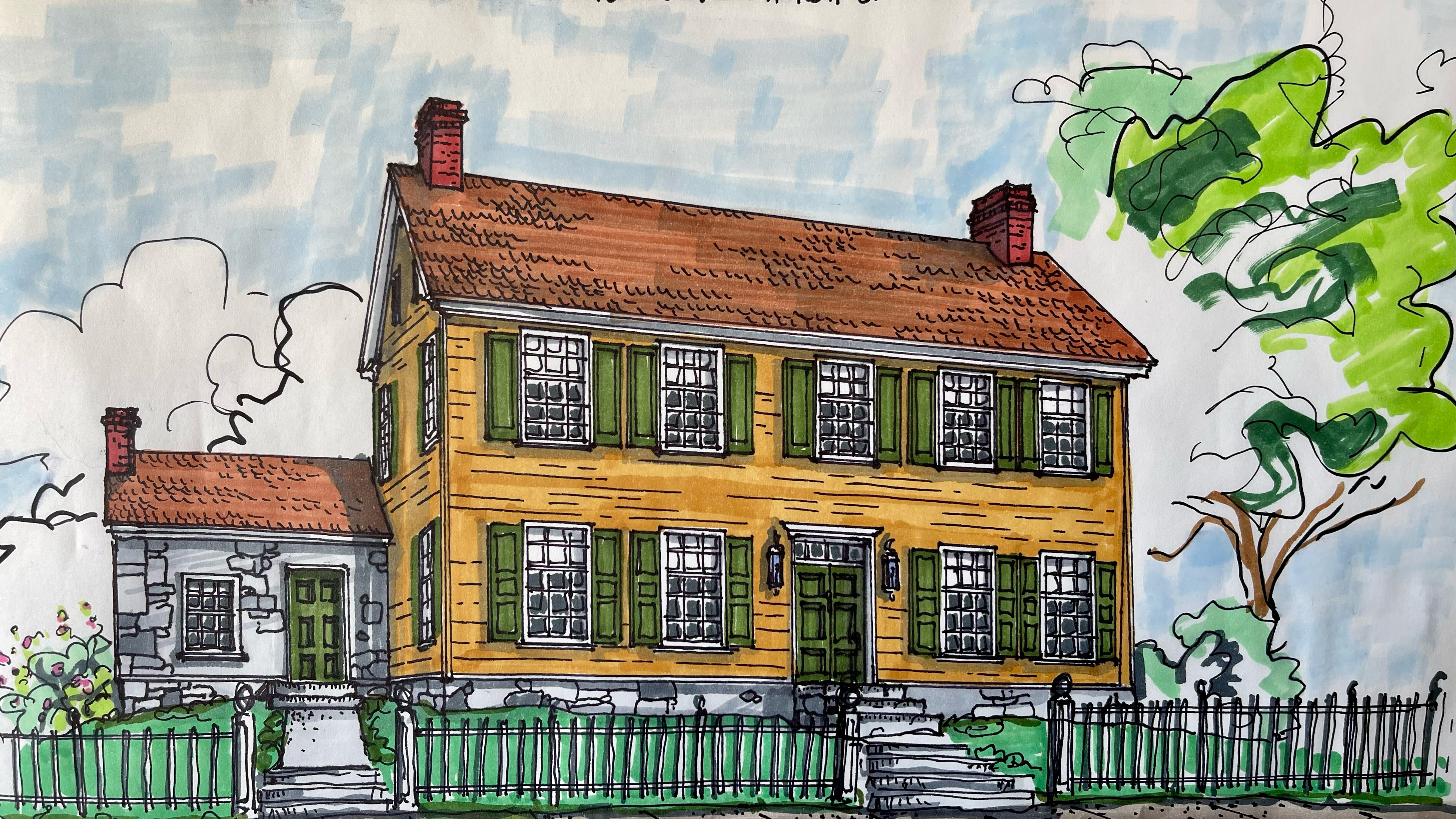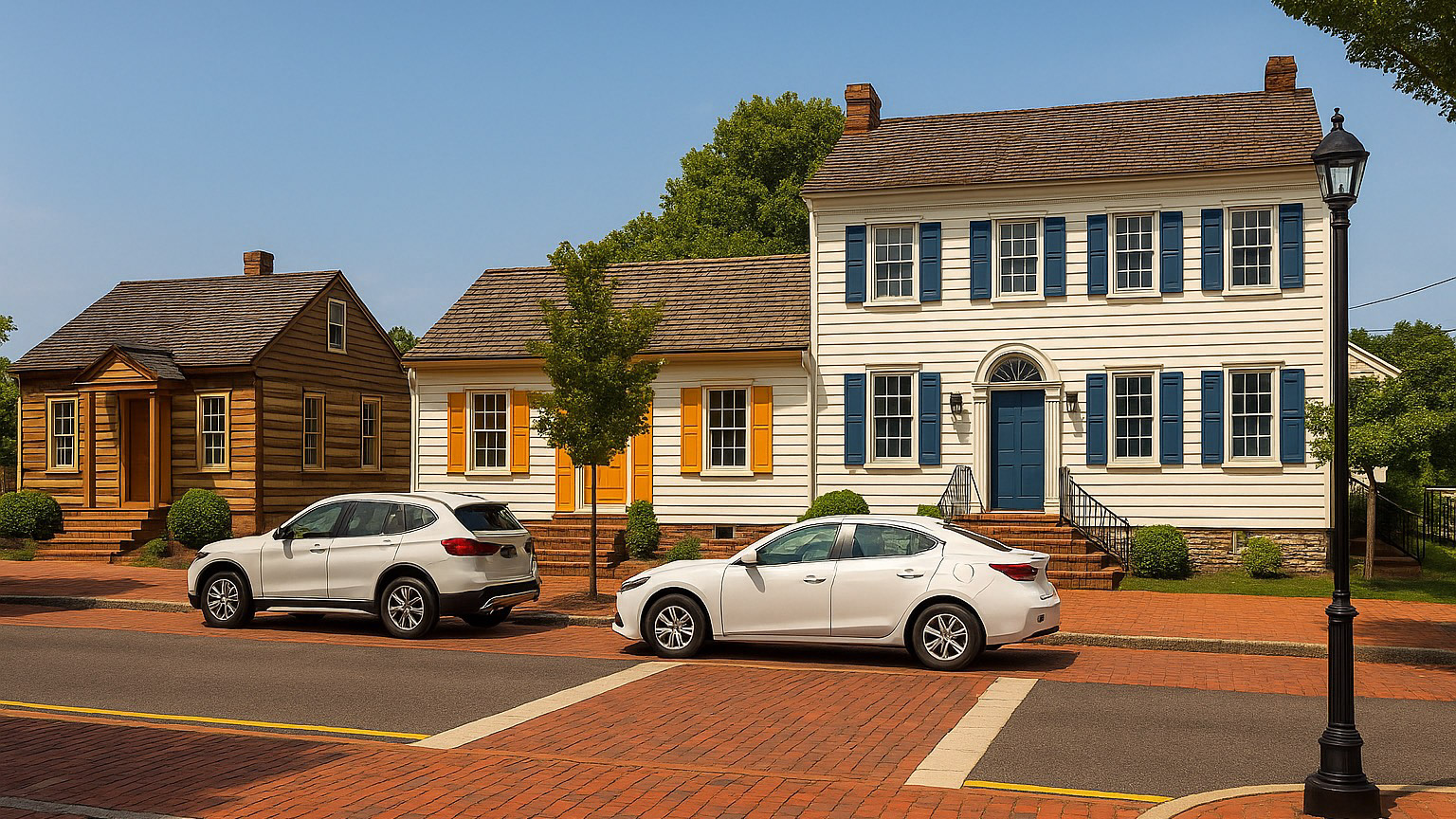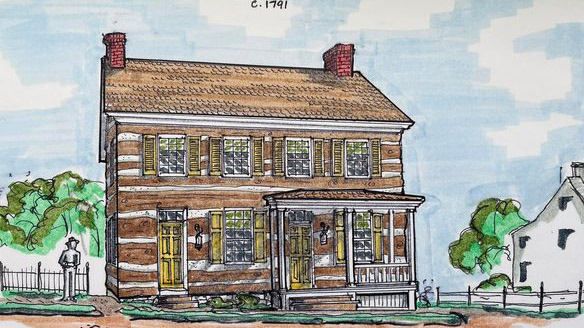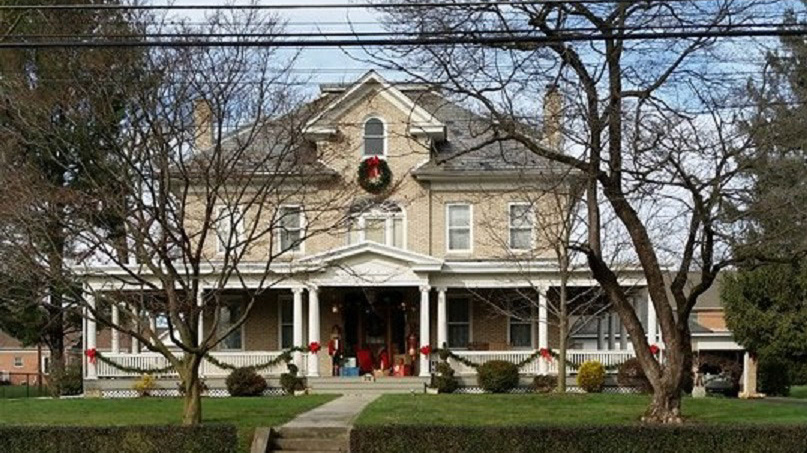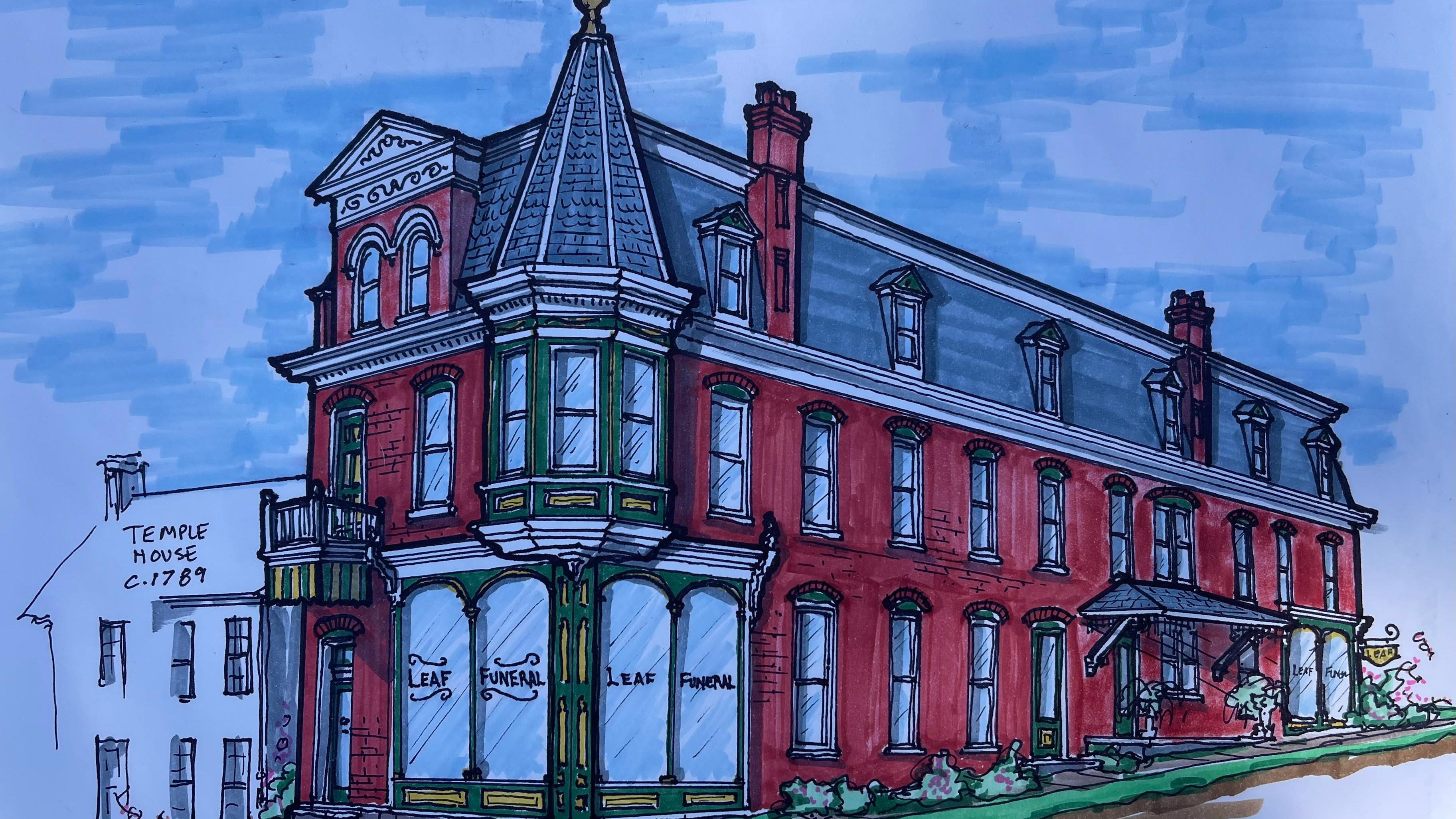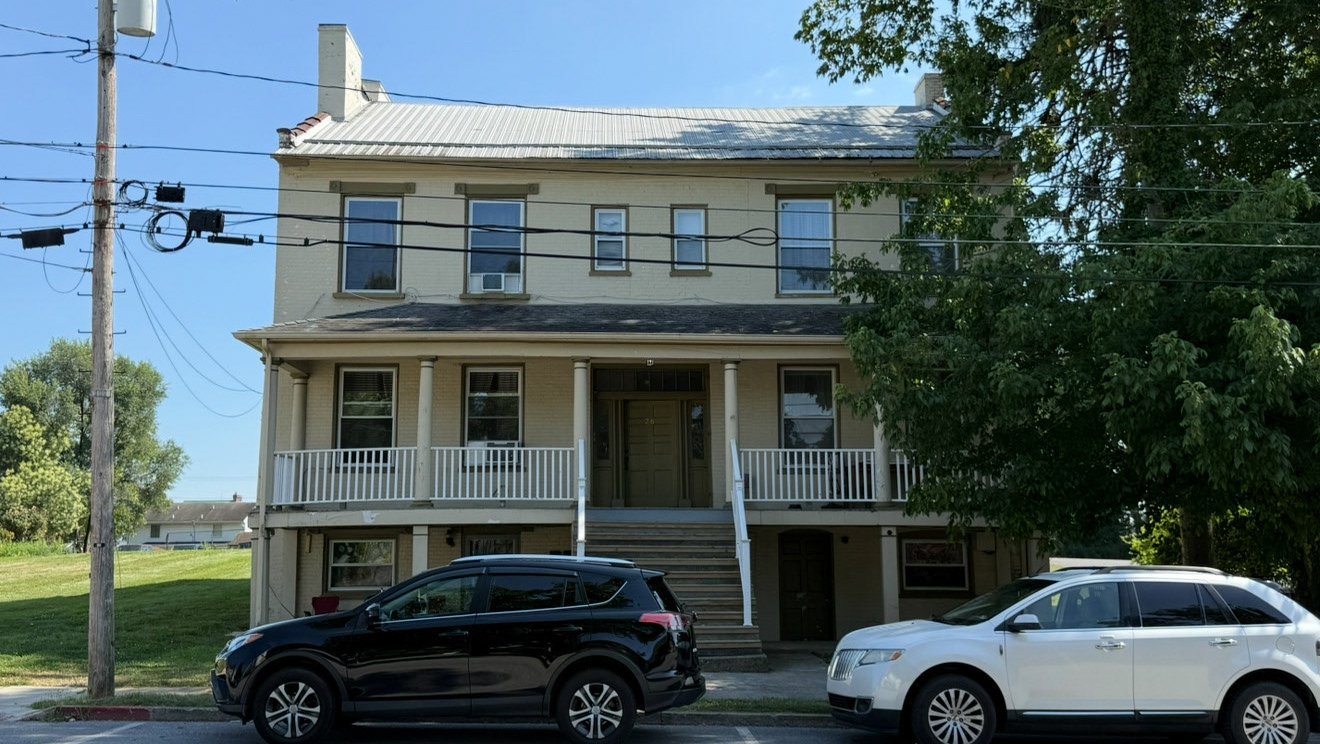
For the final history article of 2025, we tell the compelling story of a small log house and how it connects the Irish laborers who built the C&O Canal, the cholera epidemic of 1832–1833, Hospital Hill, and the coming of the railroad to Williamsport.
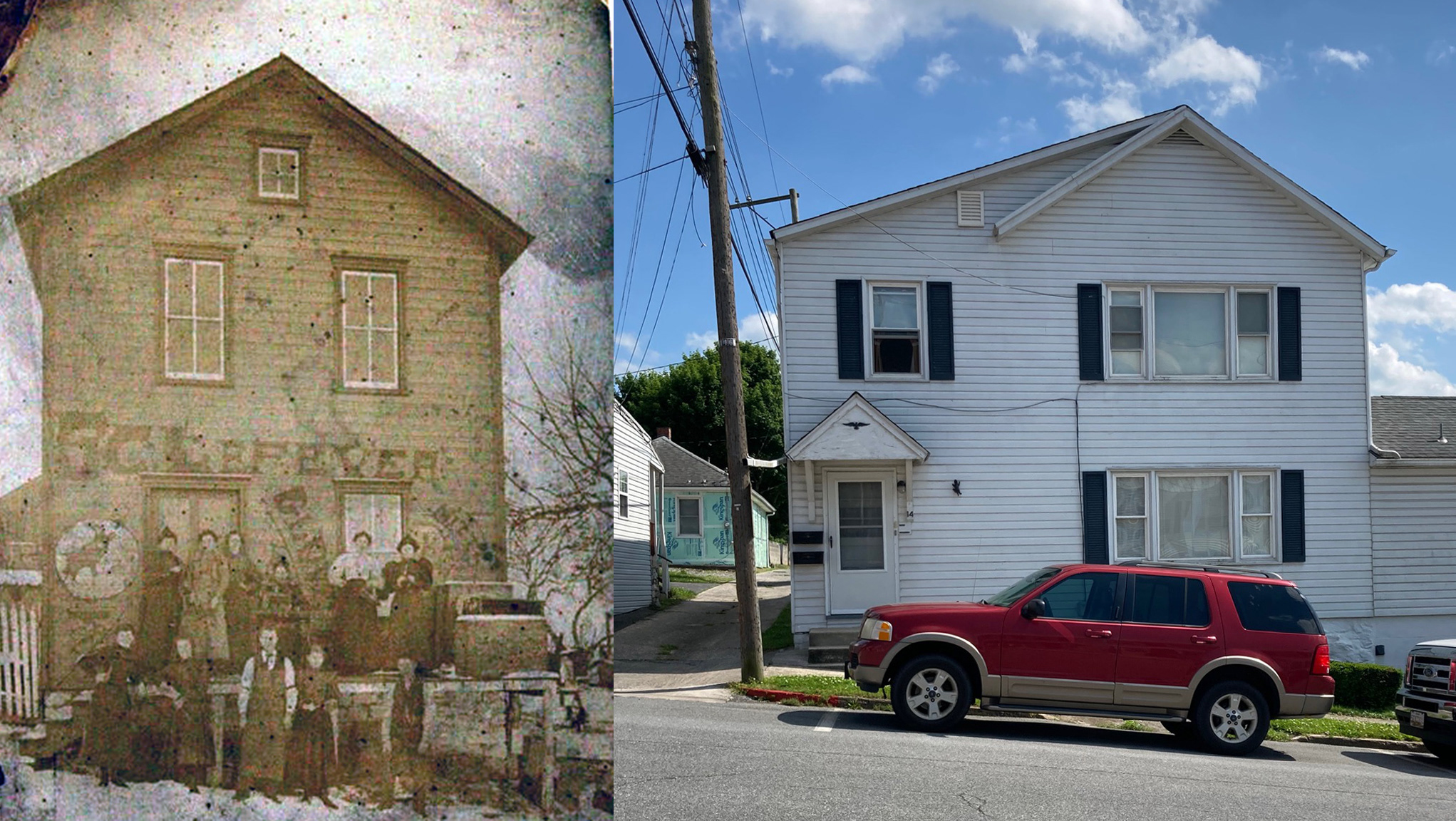
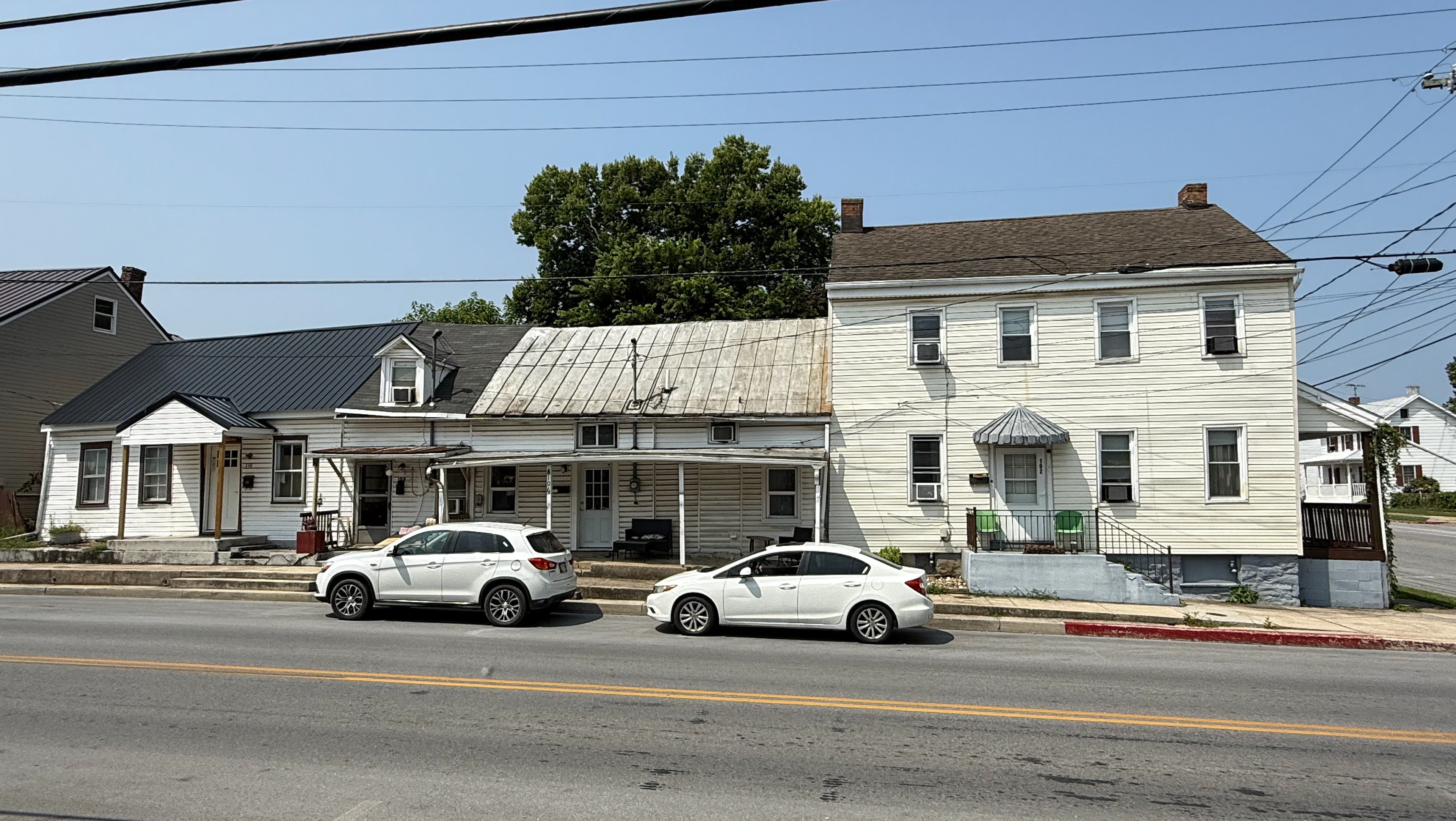
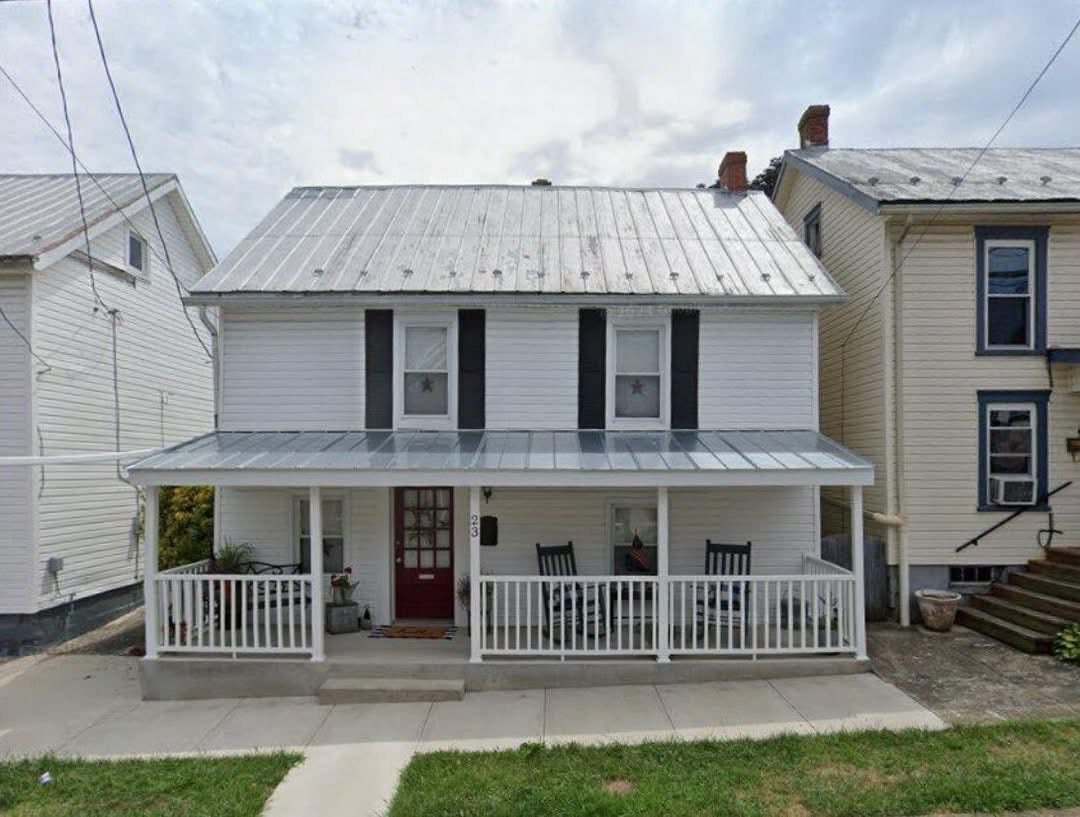
On the east side of South Artizan Street, tucked into a crowded block, sits a small, unassuming white, cottage-like house with a front porch stretching across its façade and a bright red door. Odd in design, the house features asymmetrical window and door placement, with second-floor windows nearly twice the size of those below. Yet somehow, this sweet little structure stands out. Smaller than its neighbors and much, much older, it feels as though it belongs to another time entirely. Affectionately dubbed “The Hobbit House” by owner Karen Myer, the name suits it well—it truly seems transported from another place and era.
On the east side of South Artizan Street, tucked into a crowded block, sits a small, unassuming white, cottage-like house with a front porch stretching across its façade and a bright red door. Odd in design, the house features asymmetrical window and door placement, with second-floor windows nearly twice the size of those below. Yet somehow, this sweet little structure stands out. Smaller than its neighbors and much, much older, it feels as though it belongs to another time entirely. Affectionately dubbed “The Hobbit House” by owner Karen Myer, the name suits it well—it truly seems transported from another place and era.
Original Lot 177 was first leased in 1827 by Jacob Wolf (or Wolfe). Artizan Street—originally spelled “Artisan”—was slower to develop than Williamsport’s principal thoroughfares such as Potomac, Conococheague, and Salisbury Streets, which were lined with grand stone and brick houses, churches, and shops. Artizan Street was instead intended for trades: blacksmiths, tanneries, carriage makers, butchers, and similar enterprises. That vision largely came to fruition, particularly in the two blocks south of Potomac Street, past Salisbury, toward Church Street.
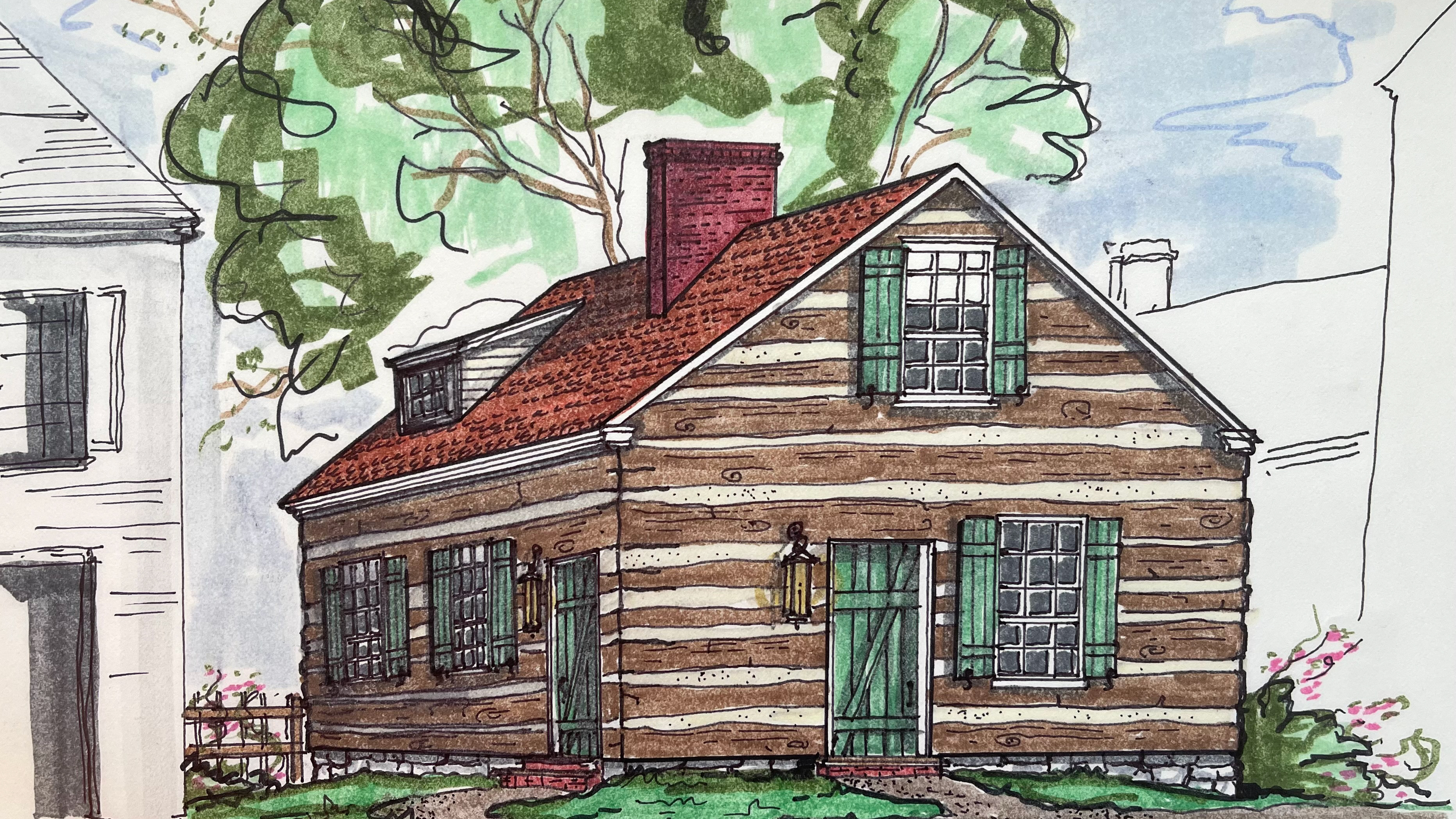
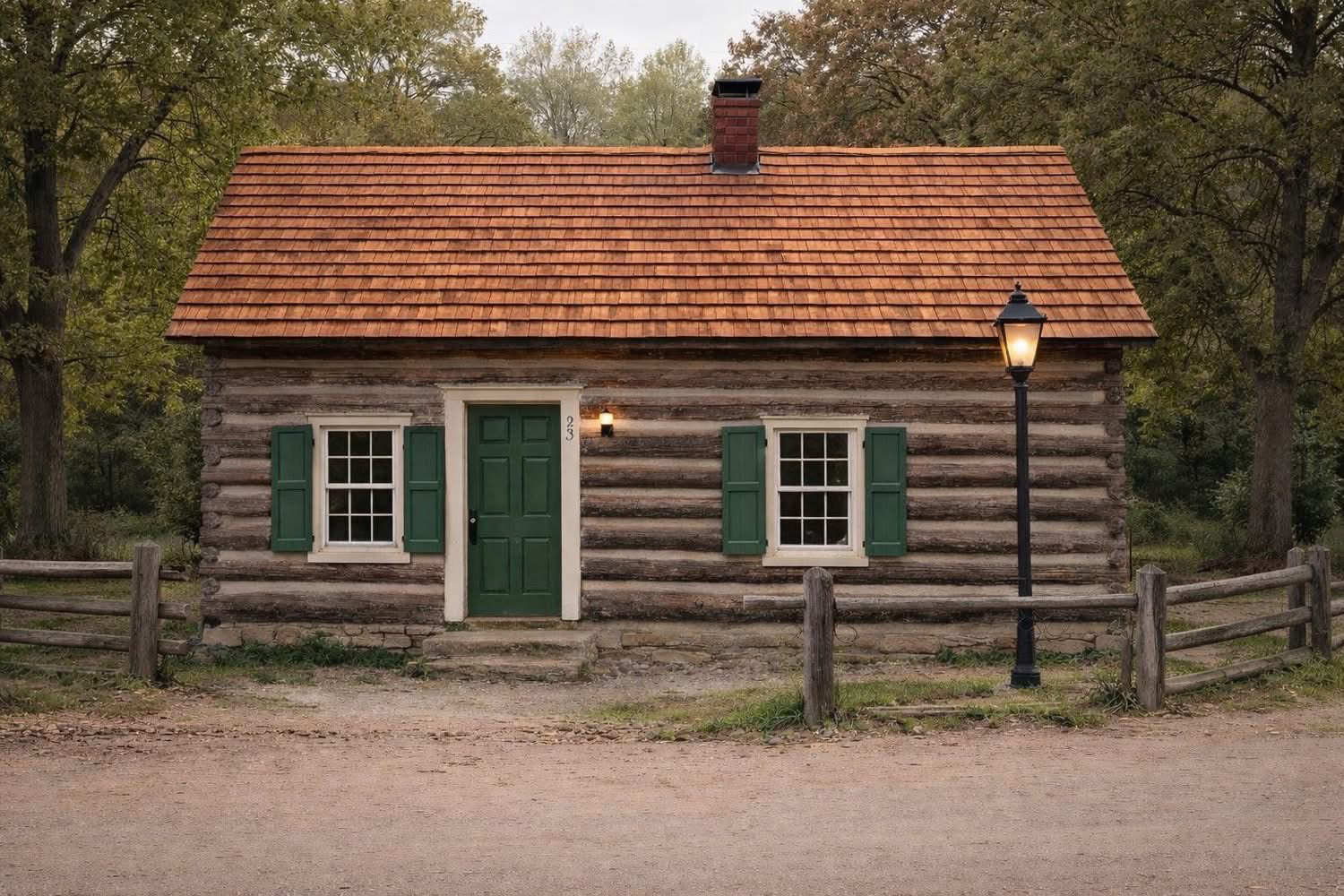
Colonel Jacob Wolf was an enterprising man who amassed wealth through shrewd business dealings and real-estate speculation. Lot 177 was what we might today call a “flip.” Wolf constructed a modest, one-story log house on the property—just enough to meet the requirements of his lease with the Williams Estate—then sold it to brothers James and Edward McQuade.
James McQuade, his younger brother Edward, and their wives, Catharine and Mary, emigrated from Ireland sometime in the 1820s. Like many Irish immigrants, they came seeking opportunity and employment along the newly begun Chesapeake & Ohio Canal, then under construction from Washington to Cumberland. The brothers’ exact occupations remain unclear, though an immigration ticket from the period lists “McQuade” as an engineer. Their ability to purchase property also suggests they may have been somewhat better off than many of their countrymen.
Colonel Jacob Wolf was an enterprising man who amassed wealth through shrewd business dealings and real-estate speculation. Lot 177 was what we might today call a “flip.” Wolf constructed a modest, one-story log house on the property—just enough to meet the requirements of his lease with the Williams Estate—then sold it to brothers James and Edward McQuade.
James McQuade, his younger brother Edward, and their wives, Catharine and Mary, emigrated from Ireland sometime in the 1820s. Like many Irish immigrants, they came seeking opportunity and employment along the newly begun Chesapeake & Ohio Canal, then under construction from Washington to Cumberland. The brothers’ exact occupations remain unclear, though an immigration ticket from the period lists “McQuade” as an engineer. Their ability to purchase property also suggests they may have been somewhat better off than many of their countrymen.
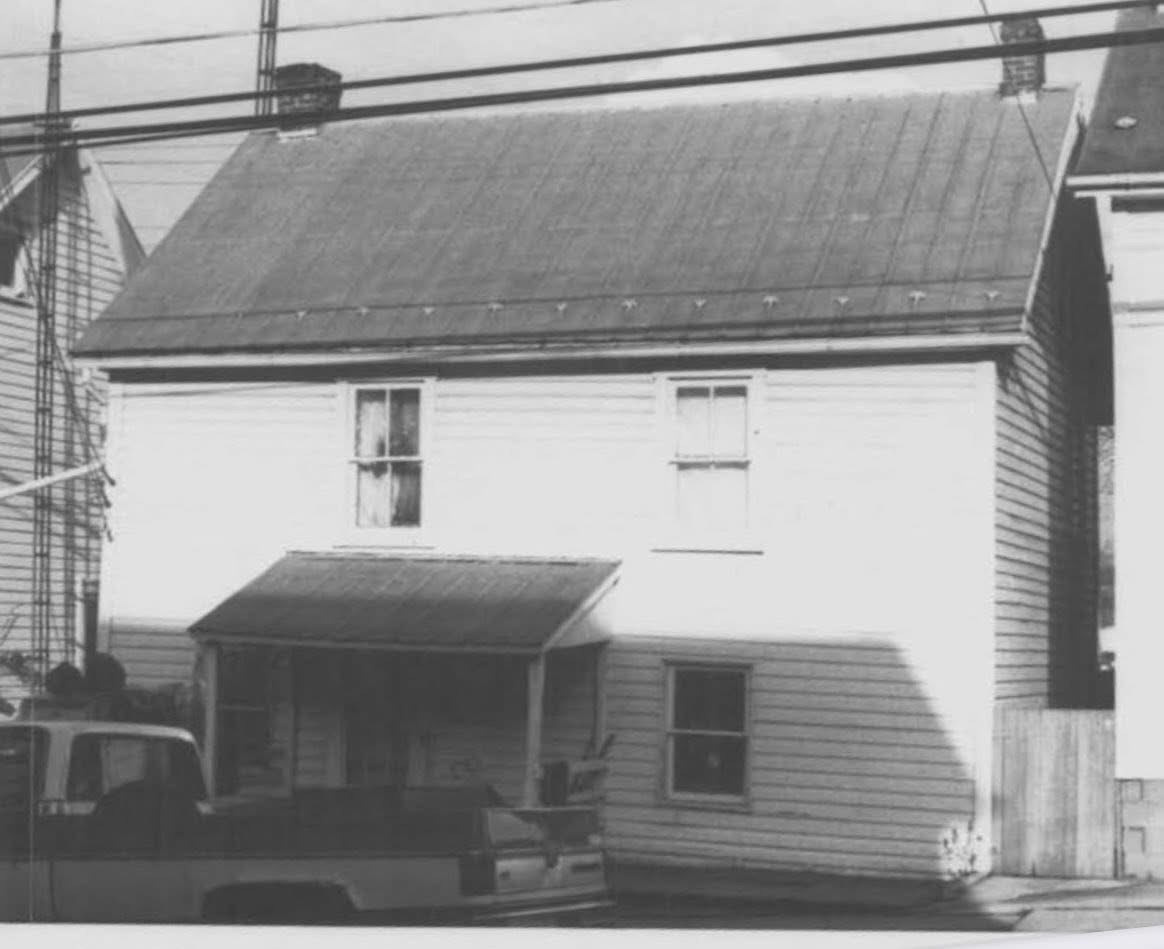
In 1831, James and Catharine McQuade paid $200 for the house and lot—a considerable sum for Irish laborers at the time. Many canal workers earned just fifty cents a day, often “plus whiskey,” for exhausting twelve-hour shifts under filthy and dangerous conditions. Housing typically consisted of crude shanties that slept as many as twenty people at a time. In 1834, Edward and Mary McQuade purchased the property from James and Catharine for $400—double the original price just three years earlier—suggesting that significant improvements may have been made, possibly including the addition of a second story.
During this period, Williamsport and the surrounding countryside were filled with large camps, or “shanty towns,” housing the Irish laborers who built the canal, dams, culverts, and aqueducts. Hundreds of men and their families crowded into these settlements. Long-standing regional feuds carried over from Ireland, with Northern Irish workers calling themselves “Longfords” and Southern Irish known as “Corkonians.” In 1834, one particularly violent, two-day conflict left several people dead and the town terrorized.
The appalling working and living conditions also contributed to the devastating cholera outbreak of 1832–1833. The crisis grew so severe that Williamsport’s Town Council voted to construct a hospital on “Hospital Hill,” just north of town, above the tannery and brickworks along Clear Spring Road. Untold numbers of Irish laborers and their families died and were buried there in unmarked graves—many of them forgotten, but not gone.
What became of James McQuade remains uncertain. By the 1840 census, Edward, Mary, and Catharine appear living in Cumberland and Frostburg, but James is absent from the record. It is likely that he, like so many others, succumbed to cholera and lies buried alongside his countrymen on Hospital Hill—a quiet casualty of hardship and exploitation.
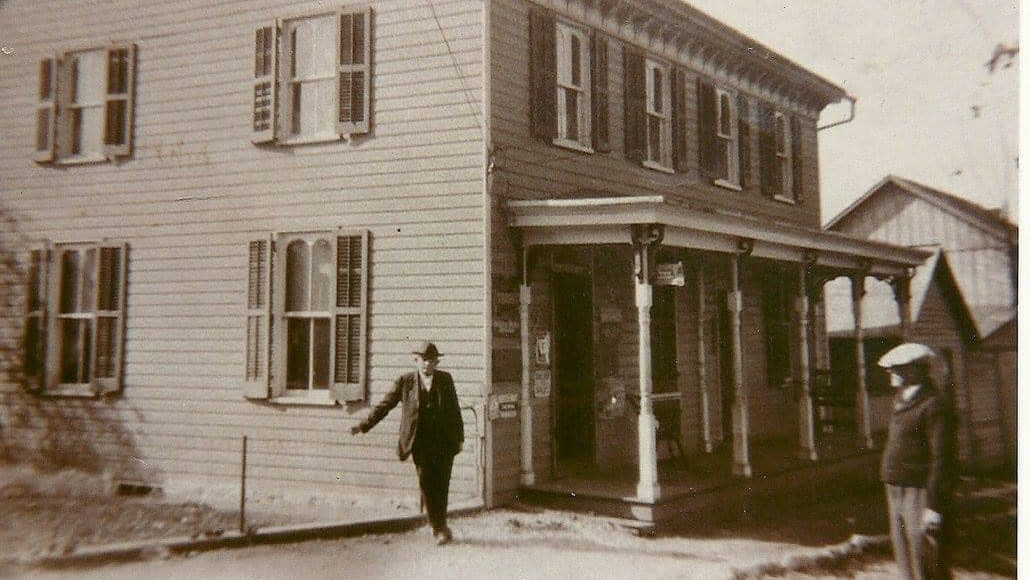
By the 1840s, Artizan Street had become home to many of the trades originally envisioned for it, with a majority of businesses owned and operated by freed African Americans and former Irish canal workers.
A later owner of note was Jeremiah Colbert, listed in the 1870 census as a railroad “boiler maker.” Sadly, the Colbert family lost the property at a tax sale in 1873.
Franklin King (1832–1917), his wife Ellen (1836–1907), and their children then owned the house for nearly forty-five years. The King family was well regarded in Williamsport, and their son, Frank Jr., later became involved in local politics, serving as tax collector in the 1930s.
In 1921, the Charlton family purchased the house and retained ownership for many decades. Around 1920, they built the adjacent house on the other half of the lot, likely as a rental property. The Charlton Carriage Works stood on the same block at 10 South Artizan Street—a building that, though recently damaged by a devastating fire, is now undergoing restoration.
The Myer family purchased the historic house on the southern half of Lot 177 in 2017. At the time, it was tired and badly in need of care. With great thoughtfulness, the Myers sought out period-appropriate fixtures, doors, and trim from local sources to replace missing elements. The floors were refinished, a new front porch added across the façade, and the kitchen updated with new cabinets and counters. Inside, log walls have been exposed, proudly celebrating the home’s origins as it approaches its 200th anniversary.
The author thanks the owners for their care, their respect for the community, and their commitment to preserving the Wolf–McQuade House for future generations. Not all of Williamsport’s history is grand or pleasant—but all of it is worth telling. The town still possesses many historic structures, yet none to spare. Each one deserves protection, appreciation, and stewardship.
Thank you, Thomas A. Freeman and Benjamin Tinsley, for your continued dedication to sharing your talent and time in making us aware of Williamsport's historic architectural treasures and the exciting potential of things that could be.